When dementia changes how a person understands or expresses themselves, a calmer approach can make everyday conversations feel safer, more respectful and more successful.
Communication Changes Are Part of Dementia
Dementia affects more than memory. It can also make it harder for a person to find words, follow a long explanation, process several choices, interpret tone or explain what they need. Repeated questions, silence, agitation or resistance may be attempts to communicate confusion, discomfort, fear or an unmet need.
These changes can be painful for families. A conversation that once felt effortless may suddenly lead to frustration on both sides. The goal is not to force the person to communicate as they did before. It is to adjust our approach so the person feels heard, respected and secure.
The Alzheimer’s Association and the National Institute on Aging recommend simple strategies such as reducing distractions, speaking calmly, asking one question at a time, allowing extra time to respond and avoiding arguments. Small changes like these can make a meaningful difference in daily life.
Six Ways to Make Communication Easier
1. Reduce distractions
Choose a quiet space whenever possible. Turn down the television, pause side conversations and approach the person from the front. Use their name, make comfortable eye contact and speak directly to them rather than talking about them as if they are not present.
2. Slow it down
Use a calm tone and short, clear sentences. Share one idea or direction at a time. Too many words can become difficult to process, even when every word is familiar. A simple statement such as “It’s time for lunch” may be easier than a lengthy explanation of the afternoon schedule.
3. Ask one question at a time
Open-ended questions can feel overwhelming. When appropriate, offer two simple choices or ask a yes-or-no question. Instead of asking, “What would you like to wear today?” try, “Would you like the blue shirt or the green shirt?” Show the items as you ask.
4. Allow more time to respond
After asking a question, pause. Resist the urge to repeat it immediately, answer for the person or finish their sentence. Processing language and finding words may take longer. A patient pause communicates respect and can reduce pressure.
5. Validate feelings instead of correcting details
When a person’s words do not match the facts, arguing may increase fear or frustration. Listen for the feeling underneath the statement. If someone says, “I need to go home,” they may be expressing discomfort or a need for familiarity. A response such as, “You miss home. Tell me what you like best about it,” acknowledges the emotion without creating a confrontation.
6. Redirect gently when frustration grows
If the conversation is no longer productive, it is okay to pause and shift attention. Offer a drink, play familiar music, look through photographs, take a short walk or begin a comforting activity. Redirection is not dismissing the person; it is helping them move toward a calmer moment.
Helpful Phrases to Try
Sometimes a small change in wording can completely change the tone of an interaction:
- Instead of: “Don’t you remember?” Try: “That’s okay. Let’s look at it together.”
- Instead of: “I already told you that.” Try: Answer briefly and offer reassurance.
- Instead of: “You’re wrong.” Try: “I can see this is upsetting. I’m here with you.”
- Instead of: “What do you want to do today?” Try: “Would you like to sit outside or listen to music?”
- Instead of giving several instructions at once Try: Offer one simple step, then wait before giving the next.
Communication Is More Than Words
A person living with dementia may rely increasingly on tone, facial expression, body language and touch. A hurried voice, tense posture or visible frustration may communicate more strongly than the words being spoken. A gentle expression, relaxed posture and reassuring presence can help the person feel safer.
Meaningful connection can also happen without a traditional conversation. Folding towels together, listening to favorite music, looking at family photographs, preparing a simple snack or sitting outside can create companionship without placing pressure on the person to remember or explain.
How Personalized Home Care Can Help
Consistent, non-medical home care can reinforce communication strategies throughout the day. A familiar caregiver has the opportunity to learn the person’s routines, preferences, life story, nonverbal cues and common sources of stress. That familiarity can make personal care and daily activities feel less confusing.
HomeChoice caregivers can support people living with dementia by:
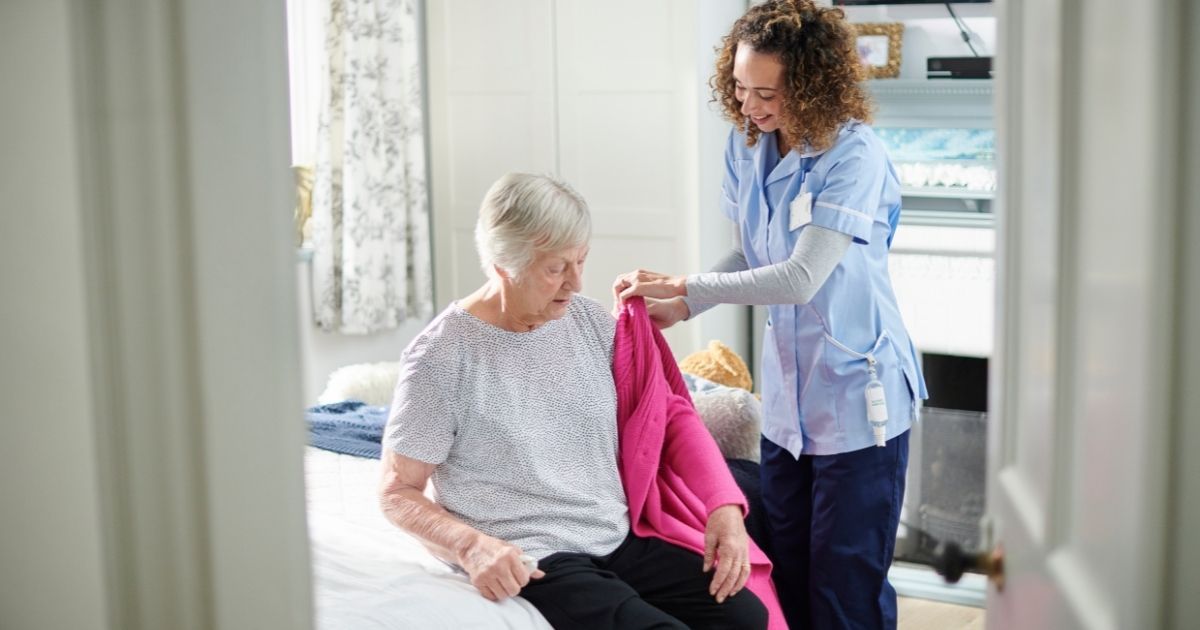
- Using calm, step-by-step prompts during bathing, dressing, meals and other daily activities;
- Maintaining familiar routines and offering limited, manageable choices;
- Providing companionship through music, conversation, photographs, crafts and other meaningful activities;
- Using reassurance and gentle redirection when the person becomes anxious or frustrated;
- Observing changes and communicating concerns to the appropriate family or clinical contact; and
- Providing respite so family caregivers can rest, work, attend appointments or simply recharge.
Non-medical caregivers do not diagnose dementia or replace medical care. Sudden changes in communication, alertness or behavior should be reported to a healthcare professional because they may be related to pain, illness, medication effects or another medical concern.
When Families May Need More Support
It may be time to consider home care when communication challenges regularly interfere with bathing, dressing, meals, medication routines, transportation or safety; when the person is becoming increasingly isolated; or when a family caregiver is overwhelmed. Beginning support earlier can give the caregiver and the person living with dementia time to build familiarity before needs become more complex.
Could Your Family Benefit from More Support at Home?
If you’ve noticed your loved one having trouble communicating know there’s a lot that can help. HomeChoice Home Care Solutions works with families across Raleigh to provide services including Companionship Care, Personal Care, and Respite Care, with an emphasis on consistent, familiar caregivers who have dementia training and can help older adults and their families navigate a dementia diagnosis.
Visit our website to learn more about resources available to families in Raleigh and Durham, Wake County, Johnston County, Wake Forest, Chapel Hill, and North Carolina, or reach out directly. It’s a conversation worth having, and we’re glad to have it with you.