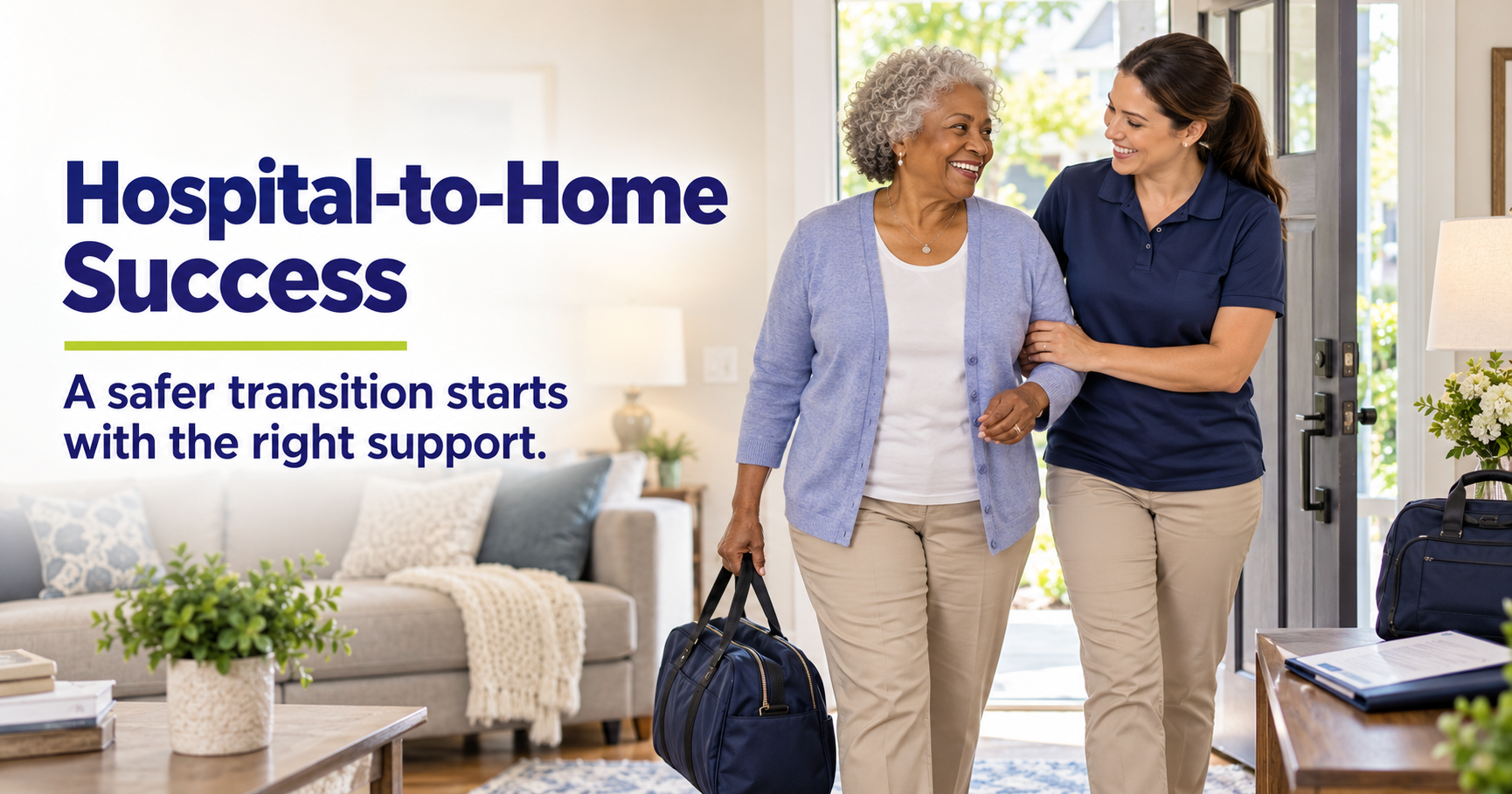
A smoother transition begins before discharge and continues through the first days at home.
Coming home from the hospital is often a welcome milestone, but it can also be an uncertain time for an older adult and the people who care about them. Discharge instructions may be detailed, routines have been interrupted, and a family may suddenly need to coordinate meals, transportation, personal care and follow-up appointments. Hospital-to-home success depends on turning the clinical plan into a routine that can be followed safely and consistently.
Why the Hospital-to-Home Transition Deserves a Plan
The Agency for Healthcare Research and Quality explains that a successful transition requires clear information to move from clinicians to the patient and family. Its IDEAL Discharge Planning guidance emphasizes discussing what life at home will be like, reviewing medications, understanding warning signs, explaining test results and making follow-up appointments. Those conversations are important, but families must also consider who will help carry out the plan once everyone is home. Read the AHRQ IDEAL Discharge Planning guidance.
For Raleigh families, planning should begin before discharge whenever possible. Ask the hospital or rehabilitation team what assistance will be needed with walking, bathing, dressing, meals and transportation. Confirm which services are clinical and which daily tasks will remain the responsibility of the patient or family. This is also the right time to explore senior home care if relatives cannot safely or consistently cover those needs.
Four Essentials for a Strong Start at Home
1. Prepare a safe, comfortable space
Before the older adult arrives, clear frequently used walkways and make sure recommended equipment is available. Place the phone, water, glasses and other essentials within easy reach. Follow the clinical team’s instructions about mobility and transfers. A calm, organized environment makes it easier to focus on recovery instead of searching for supplies or navigating clutter.
2. Make food and hydration realistic
A full refrigerator is not enough if the person cannot safely stand long enough to cook. Stock simple foods that fit the discharge instructions and arrange help with meal preparation. A caregiver providing in-home care for seniors can prepare meals, encourage regular hydration and help keep the kitchen orderly. Any diet or fluid restrictions should come from the appropriate healthcare professional.
3. Understand the medication plan
Before leaving the hospital, request an updated medication list and ask what has started, stopped or changed. Questions about dosage, side effects or interactions belong with a physician, nurse or pharmacist. Non-medical caregivers do not administer medications, but they can provide medication reminders and observe whether the daily routine appears to be going as planned.
4. Confirm follow-up and transportation
Write down upcoming medical, therapy and laboratory appointments before the discharge paperwork is put away. Decide who will provide transportation and accompany the older adult if support is needed. Reliable transportation is one of the practical home care services that can help families follow through on the discharge plan.
The First 72 Hours: Turn Instructions Into a Routine
During the first day home, focus on safe arrival, rest, meals, hydration and understanding the schedule. Over the next two days, notice whether the older adult can move around the home, manage personal care, prepare food and follow instructions as expected. Keep the hospital’s written warning signs and contact numbers easy to find, and contact the appropriate clinical provider with medical questions or changes in condition.
It is normal for a plan to need adjustment. Perhaps a daughter expected to stop by twice a day but work responsibilities make that impossible. Maybe weakness or confusion is more noticeable at home than it was in the hospital. Personalized home care assistance can fill these practical gaps while allowing family members to remain involved in a sustainable way.
How Non-Medical Home Care Supports Recovery
Non-medical home care complements the work of hospitals, physicians, home health care agencies, therapists and other clinical providers. A HomeChoice caregiver may assist with personal care, walking and transfers according to the care plan; prepare meals; provide medication reminders; help with light housekeeping; offer transportation; and communicate observations to the designated family or clinical contact.
Consistency also matters. A familiar caregiver can learn the older adult’s preferences and normal routines, making it easier to recognize when something seems different. For a spouse or adult child who has been managing the transition, respite care can provide time to rest, work or handle other responsibilities without leaving the older adult alone.
When Should a Raleigh Family Consider Additional Help?
Extra support may be worth discussing when the older adult lives alone, has new weakness or mobility limitations, is experiencing memory changes, needs help with bathing or dressing, or does not have reliable transportation. Short-notice help may also be valuable for an evening or weekend discharge, when family schedules and community resources can be harder to coordinate.
Families do not have to wait until a problem occurs. Arranging elderly care services before discharge can give everyone a clearer plan and more confidence about the return home. The appropriate schedule may range from a few hours of companion care to more extensive daily assistance, depending on individual needs.
Planning a Hospital Discharge in Raleigh?
HomeChoice Home Care Solutions has supported older adults and families across Raleigh and the Triangle since 2005. As a family-owned, independent agency, we provide companion care, personal care, meal preparation, light housekeeping, transportation, dementia care and respite support. Our team works with each family to create an individualized plan and match the client with a caregiver suited to their needs and preferences.
If someone you care about is preparing to leave the hospital or rehabilitation center, consider the practical details before they arrive home. A thoughtful plan, and the right senior care services, can help make the transition calmer, safer and more manageable.
HomeChoice Home Care Solutions works with families across Raleigh to provide services including Companionship Care, Personal Care, and Respite Care, with an emphasis on consistent, familiar caregivers who have dementia training and can help older adults and their families navigate a dementia diagnosis.
Visit our website to learn more about resources available to families in Raleigh and Durham, Wake County, Johnston County, Wake Forest, Chapel Hill, and North Carolina, or reach out directly. It’s a conversation worth having, and we’re glad to have it with you.
Call HomeChoice at 919-847-5622 or visit HomeChoiceHomeCare.com to discuss hospital-to-home support in Raleigh.