You’re not sure if you’re overreacting. Your parent seems okay, but something about how they’re eating lately has you paying closer attention. Are they losing weight? Skipping meals? Relying too much on crackers and soup? If any of that sounds familiar, you’re probably not overreacting — you’re noticing something real. Senior nutrition at home is one of the quieter challenges of aging, and it tends to get easier once families understand what’s actually driving it.
According to the National Institute on Aging, older adults are at particular risk for nutritional deficiencies even when they appear to be eating regularly — because what and how much a person eats can change significantly with age, often for reasons that have nothing to do with food preference. For families trying to support an aging parent, understanding those reasons is the starting point.
This article can help you see what’s really behind changes in eating habits, what good nutrition looks like for older adults, and what your family can do — at home, today — to make a real difference.
Why A Balanced Diet Can Be A Struggle for Aging Parents
Before jumping to meal ideas or grocery lists, it helps to understand why senior nutrition at home becomes more complicated over time. The barriers are usually situational before they’re dietary.
Appetite naturally decreases with age. Many seniors experience a reduced sense of smell and taste, which makes food less appealing. Medications can also dull appetite or cause nausea, and certain medicines interact with specific foods in ways that make eating feel complicated rather than pleasurable.
Cooking becomes harder. Fatigue, arthritis, balance concerns, and difficulty standing for long periods can make preparing nutritious meals feel like more effort than it’s worth. When cooking is hard, convenience takes over — and convenience often means fewer calories from whole foods and more from processed foods that are easy to grab.
Loneliness changes eating habits. Meals are social by nature. When an older adult is eating alone most of the time, the motivation to cook a proper meal often fades. Research from the AARP Public Policy Institute has found that social isolation is a significant contributor to poor nutrition and food insecurity among older adults — not because food isn’t available, but because eating alone, meal after meal, quietly erodes the habit of eating well.
Physical changes affect what’s comfortable to eat. Trouble chewing, dry mouth, and digestive sensitivity can make previously enjoyable foods uncomfortable. An aging parent may quietly stop eating certain things — lean meats, raw vegetables, whole grain bread — without mentioning why.
What Does Healthy Eating Actually Look Like?
A healthy diet for an older adult isn’t dramatically different from a healthy diet for anyone — but a few areas deserve extra attention.
Fruits and Vegetables: The Foundation
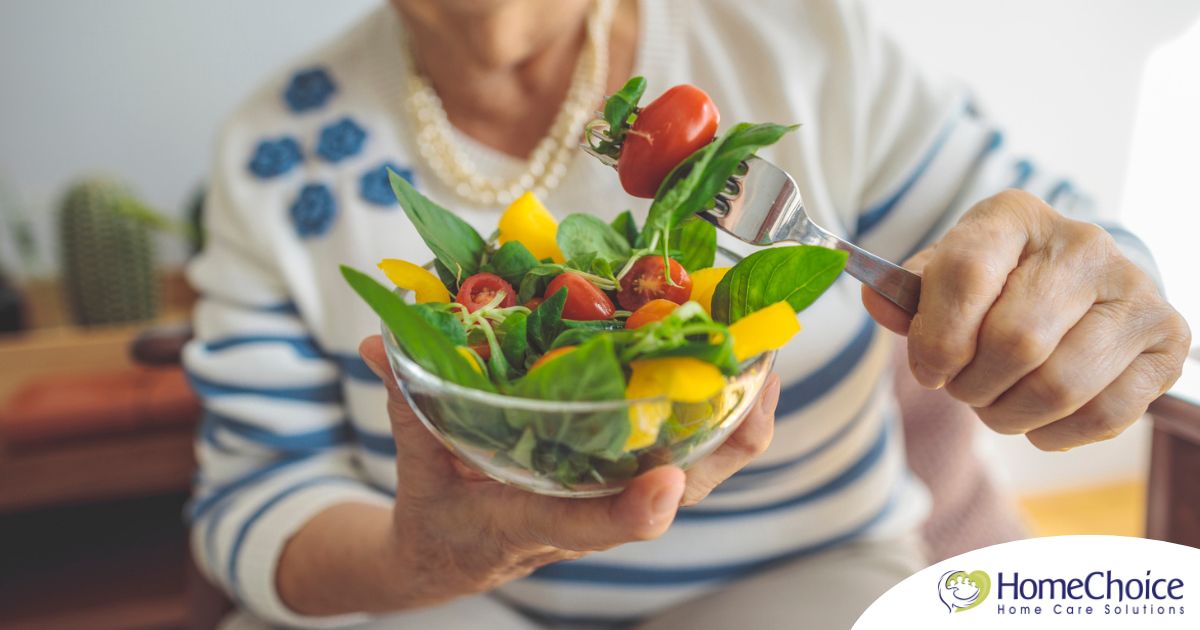
Most nutrition guidance for older adults starts here, and for good reason. Fruits and vegetables provide fiber, vitamins, and antioxidants that support healthy aging and help reduce the risk of chronic diseases including heart disease and high blood pressure. The Dietary Guidelines for Americans recommend filling half the plate with produce at each meal — a simple visual that’s easier to apply than tracking servings.
For older adults with trouble chewing, softened or cooked vegetables, mashed potatoes with added vegetables mixed in, and smoothies with plain yogurt and fruit are all ways to keep produce in the diet comfortably.
Protein — Enough of It
Older adults need adequate protein to preserve muscle mass and maintain body weight as metabolism slows. Good sources include eggs, low fat dairy, lean meats, ground turkey, kidney beans, and legumes. If a parent has moved away from red meat, that’s fine — plant-based proteins and lean alternatives offer the same benefits without the saturated fats that contribute to heart disease.
Whole Grains Over Empty Calories
Swapping refined carbohydrates for whole grains — whole grain bread, brown rice, oats — supports digestive health and provides more sustained energy. For older adults who love rice, brown rice or even jasmine rice are easy substitutions that don’t require a big change in cooking habits.
Calcium and Vitamin D
Bone density becomes a priority as adults age, and both calcium and vitamin D are essential to maintaining it. Low fat dairy, fortified foods, and leafy greens are good dietary sources of calcium. Vitamin D is harder to get from food alone, and many older adults are deficient — a doctor or registered dietitian can advise on whether a supplement makes sense.
Watching Sodium Intake
High blood pressure is common among older adults, and sodium intake is one of the most modifiable dietary factors. Cooking at home makes this easier to manage — using herbs, lemon juice, and spices in place of salt adds flavor without the health drawbacks of excess sodium.
Healthy Eating Tips Families Can Start Using Now
Once you understand what’s getting in the way, small changes can add up quickly. These approaches have helped many families supporting aging parents at home.
Meal Planning — Even Loosely
Planning meals for the week — even just sketching out a few dinners — reduces the number of decisions an older adult has to make each day and makes it easier to ensure nutritious meals are available. It doesn’t need to be rigid. A rough plan that includes a protein, a vegetable, and a whole grain at most meals is a good baseline.
For families in Raleigh, this is also an area where a home care aide can genuinely help. Meal prep support — shopping, chopping, and cooking alongside a parent — makes healthy meals more accessible without requiring the older adult to manage everything independently.
Keep Healthy Snacks Visible and Easy
Many older adults do better with smaller, more frequent eating rather than three full meals. Keeping healthy snacks at eye level in the refrigerator — hard-boiled eggs, plain yogurt, sliced bell peppers, fruit, whole grain crackers — means something nutritious is always within reach without requiring effort to prepare.
Make Meals More Social
If a parent is eating alone most days, consider whether shared meals are possible — even occasionally. Research consistently links social eating to better nutritional intake among older adults. Eating with a caregiver, a visiting family member, or even a neighbor a few times a week can meaningfully change how much and how well a person eats.
Adjust Texture and Preparation
If trouble chewing or digestive sensitivity is changing what a parent will eat, adjust preparation rather than the foods themselves. Softer proteins, cooked vegetables, and foods prepared with moisture (soups, stews, casseroles) allow older adults to continue eating healthy food that works for them physically.
Choose Foods That Do Double Duty
When an older adult is eating less overall, every bite matters more. Nutrient-dense options — eggs, avocado, nut butters, legumes, low fat dairy — deliver more nutritional value per serving than empty calories from processed snacks or refined carbohydrates. Helping a parent choose foods that are both satisfying and nourishing is one of the most practical ways to support healthy aging.
What Programs and Resources Are Available?
Home Delivered Meals
Families who are concerned about food insecurity or a parent’s ability to cook safely may find that meal delivery programs offer meaningful support. Meals on Wheels America coordinates home delivered meals for older adults through a national network of local programs — providing not just food, but regular contact and a wellness check for homebound seniors. Congregate meals, offered through senior centers and community programs, provide both nutrition and social connection in a group setting.
These are federally supported programs available in many communities, including Raleigh and Durham, Wake County, Johnston County, Wake Forest, Chapel Hill, and North Carolina. A local Area Agency on Aging can help connect families with what’s available nearby.
Nutrition Counseling
For older adults managing multiple health conditions, a registered dietitian can provide personalized guidance on balanced diet adjustments, supplementation, and managing dietary needs alongside medications. A primary care physician can provide a referral.
How Home Care Can Help with Senior Nutrition at Home
For many families, the gap between knowing what good nutrition looks like and making it happen day-to-day is a practical one. Time, distance, and the demands of daily life make it hard for family members to consistently support a parent’s meals — especially when that parent lives alone.
This is where in-home support makes a real difference. At HomeChoice Home Care Solutions, our caregivers assist with meal planning, grocery shopping, and meal preparation — helping older adults in Raleigh and Durham, Wake County, Johnston County, Wake Forest, Chapel Hill, and North Carolina eat well without having to manage it all on their own. Companionship during meals also plays a role: a caregiver who shares a meal or sits together at the table can quietly shift the entire experience of eating at home.
Our services include Companionship Care, Personal Care, and Respite Care. If you’re concerned about a parent’s nutrition, weight, or eating habits, we’re glad to talk through what support might look like for your family.
A Note Before You Start
Changes in eating habits can sometimes signal something worth discussing with a doctor — especially if weight loss is significant or appetite changes are sudden. This article is meant to help families understand the landscape of senior nutrition and take practical steps at home, but it’s not a substitute for personalized medical advice. If you have concerns, a conversation with your parent’s physician or a registered dietitian is always a good next step.