A practical winter safety and emergency readiness guide for older adults and their families.
Cold snaps in Raleigh may be shorter than winters in northern states, but freezing temperatures, ice and power outages can still create serious risks for older adults. A home that feels only slightly cool to a younger person may be unsafe for someone whose body produces less heat, whose mobility is limited or whose health conditions and medications affect temperature regulation. Thoughtful preparation can reduce those risks before the forecast turns severe.
Cold weather safety for seniors is not limited to wearing a heavier coat. It includes keeping the home warm, using heating equipment safely, preventing falls, maintaining food and medication routines, preparing for an outage and making sure someone checks in. Families looking for senior home care in Raleigh can use the following steps to build a practical winter plan around a loved one’s actual needs.
Why Cold Weather Can Be More Dangerous for Older Adults
The National Institute on Aging explains that age-related changes can make it harder for an older adult to recognize that the body is becoming dangerously cold. Diabetes, thyroid conditions, Parkinson’s disease, arthritis and memory problems may add difficulty. Some prescription and over-the-counter medications can also affect body heat, so questions about medications should be discussed with a physician or pharmacist.
Risk is not limited to long periods outdoors. Hypothermia can develop inside a home that is too cool, and it can occur at temperatures above 40 degrees when a person becomes chilled by rain, perspiration or wet clothing. That is why a winter safety plan should focus on the indoor environment as well as outdoor conditions.
Keep the Home Warm Without Creating New Hazards
The National Institute on Aging recommends setting the heat to at least 68 degrees. Families can also reduce drafts with weather stripping or a rolled towel at the bottom of a door, close curtains at night and encourage warm clothing indoors. Socks, slippers, layered clothing and blankets can improve comfort, but they should not create loose fabric near a space heater or a tripping hazard along walking paths.
The CDC winter storm safety guidance emphasizes safe heating. Never use a gas stove or oven to heat a home. Space heaters should follow the manufacturer’s instructions and remain at least three feet from bedding, curtains, furniture and other items that can burn. Avoid damaged cords and extension cords, and do not place a heater where the cord creates a fall risk. Homes should have working smoke and carbon monoxide alarms with battery backup.
Reduce Falls on Icy Days
Ice on a porch, driveway or sidewalk can turn a routine trip to the mailbox into an emergency. Keep exterior steps and walking surfaces treated and clear. Encourage nonskid, rubber-soled shoes and use railings whenever they are available. If conditions are poor, postpone nonessential trips and arrange help with groceries, prescriptions or other errands.
Older adults should generally avoid shoveling snow when possible. Cold weather increases strain on the heart, while lifting and twisting add exertion and slippery surfaces add fall risk. A neighbor, family member or paid service can handle outdoor cleanup. Inside the home, immediately dry wet entryways and keep winter boots, umbrellas and cords out of common walking paths.
Build a Cold Weather Emergency Kit
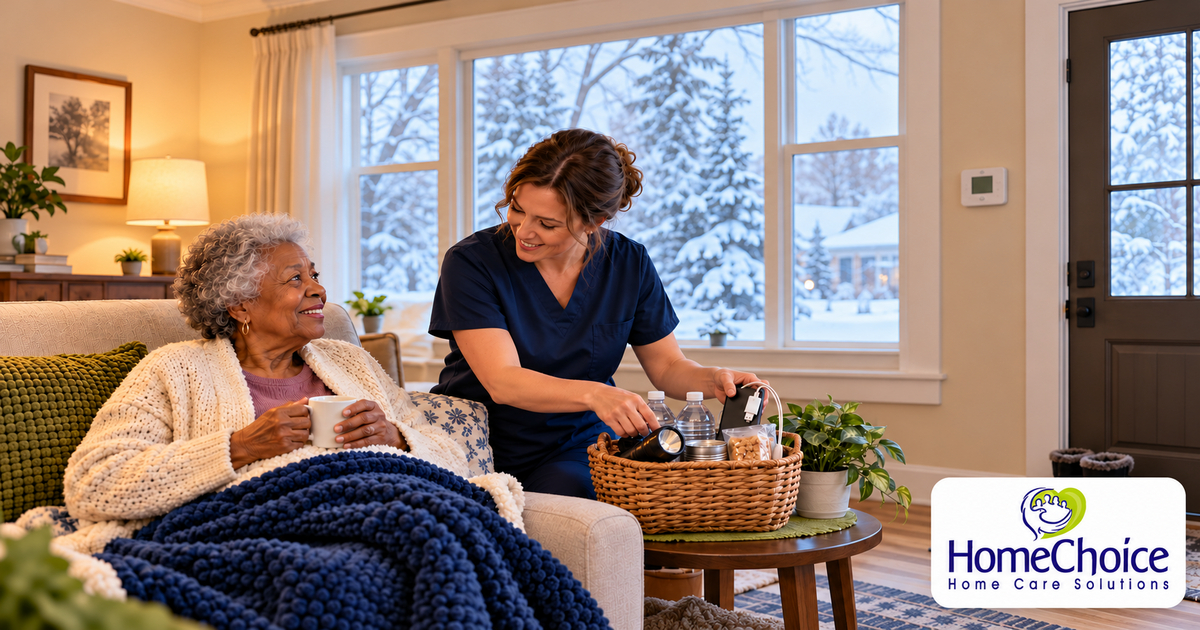
A practical kit does not need to be complicated. The FEMA winter storm preparedness checklist recommends planning around each household member’s specific needs. Useful items include:
- Flashlights or battery-powered lanterns with extra batteries
- Bottled water and easy-open, shelf-stable foods
- Warm clothing, blankets and a sleeping bag if appropriate
- A charged mobile phone, backup battery and charging cables
- A current medication list, copies of prescriptions and essential health information
- A first-aid kit, extra eyeglasses and backup batteries for needed devices
- A paper list of family, physician, pharmacy, utility and emergency contacts
- Pet food, medication and supplies when an animal lives in the home
Check the kit before winter and before a predicted storm. Replace expired food, batteries and other time-sensitive supplies. Store everything where the older adult and family members can reach it easily, not in a garage, attic or high cabinet that may be difficult to access during an outage.
Plan for a Winter Power Outage
A power outage may affect heat, lighting, communication, refrigerated food and electrically powered medical equipment. Decide in advance where the older adult can go if the home becomes too cold. Identify who can provide transportation and who has a key or safe way to enter the home. Keep phones and backup batteries charged when severe weather is expected.
Ready.gov advises families to prepare for power outages by gathering supplies, creating a communication plan and discussing electrically powered medical devices with the appropriate healthcare provider. Generators, grills and camp stoves must never be used indoors, in garages or near windows because of deadly carbon monoxide. If a generator is part of the plan, follow current safety instructions and have a qualified person responsible for its operation.
Protect Medications Meals and Daily Routines
Winter weather can disrupt the routines that help an older adult remain steady and well. Make sure essential prescriptions are available before a storm, but do not stockpile or change a medication schedule without professional guidance. Ask the pharmacist how refrigerated medications should be handled during an outage and what to do if storage requirements cannot be maintained.
Regular meals and hydration matter as well. An older adult may skip meals when grocery supplies run low, cooking feels difficult or a family caregiver cannot travel safely. Keep simple foods on hand that match the person’s dietary needs and can be prepared with little effort. If the home loses power, follow food-safety guidance and discard items that are no longer safe rather than relying on smell alone.
Create a Dependable Check In Plan
A check-in plan should name specific people, times and actions. “Someone will call Mom” is easy to assume and easy to miss. Decide who will contact her before the storm, who will check during an outage and who will follow up afterward. Include a backup person if the first contact loses power, becomes ill or cannot travel.
During each check-in, ask about the indoor temperature, food, water, medications, mobility, phone charge and heat. Listen for confusion, slowed speech or unusual sleepiness. If the older adult does not answer as expected, the plan should identify who can safely visit or request a wellness check.
Know the Warning Signs of Hypothermia
Hypothermia is a medical emergency. Warning signs may include shivering, exhaustion, confusion, fumbling hands, memory loss, slurred speech and drowsiness. A body temperature below 95 degrees requires immediate medical attention. Call 911 if an older adult shows signs of hypothermia. Move the person to a warmer place if it is safe, remove wet clothing and wrap them in dry blankets while waiting for help. Do not delay emergency care while trying home remedies.
How Home Care Supports Winter Safety for Seniors
A family can prepare the home and stock supplies, but a written plan only works when daily needs are handled consistently. Non-medical home care adds dependable presence and practical assistance, especially when relatives live at a distance, work full time or cannot travel safely during poor weather.
Depending on the care plan, a HomeChoice caregiver can help with:
- Regular check-ins, companionship and meaningful engagement
- Meal preparation, hydration support and medication reminders
- Personal care, mobility assistance and safer daily routines
- Light housekeeping that keeps common pathways clear
- Transportation, errands and essential pickups when conditions allow
- Observation of changes and communication with the appropriate family contact
- Respite that helps a family caregiver maintain a sustainable routine
Non-medical caregivers do not diagnose illness, adjust medications, operate medical equipment outside their training or replace emergency and clinical services. Their role is to support the care plan and help an older adult follow safer routines at home.
Choosing Senior Home Care in Raleigh Before Winter Weather Arrives
Families should not have to wait for an ice storm or power failure to discover that an older relative needs more help. When comparing home care providers, ask how caregivers are screened, trained, matched and supervised; how scheduling changes are handled; and who answers when a concern develops after normal business hours. Dependability matters when a client is counting on help with meals, personal care, transportation or companionship.
HomeChoice Home Care Solutions has provided personal care and companion care throughout Raleigh and the Triangle since 2005. We are independent and family-owned, and HomeChoice Match helps us consider each client’s needs, schedule, preferences and personality when selecting a caregiver. Our 99.8 percent dependability reflects our commitment to being there when families are counting on us.
Our Wellness Program supports nutrition, engagement, mobility and daily measurements, while our office team can help families navigate long-term care insurance paperwork and billing when applicable. Services can begin with a focused schedule and adjust as needs change.
Prepare Before the Next Cold Snap
Winter safety is easier to manage before the forecast becomes urgent. Check the thermostat, heating equipment, alarms, walkways, emergency supplies, medication plan and family contact list now. Then talk with the older adult about which parts of the plan feel manageable and where support would make the greatest difference.
If you are concerned about an older adult living alone or managing daily routines during cold weather, contact HomeChoice Home Care Solutions or call 919-847-5622. We help families arrange personalized home care assistance in Raleigh, Cary, Durham, Chapel Hill, Wake Forest and surrounding Triangle communities. A conversation before the next storm can turn a vague concern into a safer, more dependable plan.
Recommended Outbound Sources
National Institute on Aging Cold Weather Safety for Older Adults
CDC Safety During and After a Winter Storm
Ready.gov Winter Storm Preparedness Checklist