How families can explore VA Aid and Attendance while putting dependable daily support in place at home
Many older Veterans and surviving spouses want to remain in the homes and communities they know. The challenge is often not the desire to stay independent, but the growing need for help with bathing, dressing, meals, transportation, mobility, medication reminders or companionship. For families searching for Veterans home care in Raleigh, the right combination of benefits guidance and dependable non-medical support can make aging at home more manageable.
One resource worth exploring is the Department of Veterans Affairs pension program and its Aid and Attendance benefit. These programs are not available to everyone, and approval is never automatic. However, qualified Veterans and survivors may receive monthly payments that can help them manage care-related expenses. Understanding the basic framework is a useful first step.
What VA Aid and Attendance Means
According to the U.S. Department of Veterans Affairs, Aid and Attendance provides an additional monthly amount for certain people who already receive a VA pension and meet specific care-related requirements. A person may potentially qualify if they need another person’s help with daily activities such as bathing, feeding or dressing; spend a large part of the day in bed because of illness; live in a nursing home because of a physical or mental disability; or have severely limited eyesight.
The VA also offers a Housebound allowance for some pension recipients who spend most of their time at home because of a permanent disability. Aid and Attendance and Housebound benefits are different, and a person cannot receive both at the same time. A VA-accredited professional can help a family understand which path may apply.
Can a Surviving Spouse Qualify
A surviving spouse may be eligible for a needs-based VA Survivors Pension if the deceased Veteran met qualifying wartime service requirements and the spouse meets the VA’s rules concerning marriage, remarriage, income and net worth. A surviving spouse who receives a Survivors Pension and needs help with daily activities or is housebound may also be able to receive an increased pension amount.
Because eligibility depends on several personal and financial details, families should avoid relying on a neighbor’s experience or a quick online estimate. The Veteran’s service dates, discharge status, the surviving spouse’s circumstances, household finances and medical evidence can all affect the claim. Current rules and benefit rates may also change over time.
How VA Benefits May Support Home Care
For a qualified family, pension and Aid and Attendance payments may help offset eligible expenses connected with needed care. That can make it easier to arrange consistent help at home instead of relying entirely on an exhausted spouse, adult child or neighbor. The benefit is paid to the eligible Veteran or survivor; it is not a special HomeChoice program, and HomeChoice does not decide eligibility or approve claims.
This distinction matters. A home-care agency creates and delivers a care plan. The VA determines benefit eligibility. An accredited Veterans Service Organization representative, claims agent or attorney can help with a claim. Keeping those roles clear protects families from confusing care recommendations with financial or legal advice.
What Non Medical Home Care Can Provide
A financial benefit is only useful if a family can turn it into reliable support. Non-medical home care helps with the practical parts of daily life that often become harder with age, illness or disability. Depending on the care plan, support may include:
- Assistance with bathing, dressing, grooming, toileting and other personal care
- Help with walking, transfers and safer movement through the home
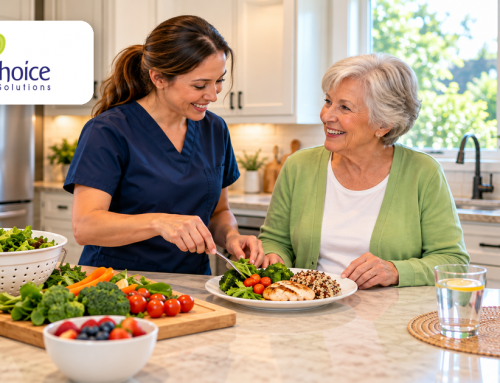
- Meal preparation, hydration support and medication reminders
- Light housekeeping, laundry, errands and grocery shopping
- Transportation to medical appointments and community activities
- Companionship, conversation and meaningful engagement
- Respite that gives a family caregiver time to rest, work or manage other responsibilities
These services do not replace medical care, skilled nursing or therapy. They complement the clinical plan by helping the person follow safer routines between appointments and by giving families another set of attentive eyes and ears in the home.
Signs It May Be Time to Discuss Help at Home
Families do not need to wait for an emergency. A conversation about home care may be appropriate when a Veteran or surviving spouse has experienced falls or near-falls, is skipping meals, struggles with personal care, misses medications, stops driving safely, becomes isolated or depends heavily on one overwhelmed family caregiver. Changes in memory, strength, balance or judgment are also reasons to involve the person’s healthcare provider.
Starting early allows the older adult to participate in decisions about schedules, caregiver preferences and the type of help that feels comfortable. Even a few hours of support can relieve pressure and create a more sustainable routine. As needs change, the plan can be adjusted.
How to Begin the VA Benefits Process in Raleigh
Families can begin by collecting the Veteran’s discharge papers, marriage and death certificates when applicable, financial information, medical documentation and a summary of the help needed with daily activities. Do not delay asking for guidance simply because every document is not yet organized. A trained representative can explain what is needed for the specific claim.
The VA recommends working with a VA-accredited representative or Veterans Service Organization. Accredited VSO representatives provide help with VA benefit claims at no charge. Raleigh-area families can also contact the North Carolina Department of Military and Veterans Affairs to connect with benefits and claims assistance.
Be cautious about anyone who guarantees approval, pressures the family to move assets or asks for large upfront fees before explaining their accreditation and services. Benefit planning can affect legal and financial decisions, so qualified guidance matters.
Choosing Home Care for a Veteran or Surviving Spouse
When comparing Raleigh home-care providers, look beyond a list of services. Ask how caregivers are screened, matched and supervised; how scheduling changes are handled; who answers the phone when a concern arises; and how the agency communicates with family members. Dependability is especially important when the client relies on a caregiver for meals, personal care or transportation.
HomeChoice Home Care Solutions has provided personal care and companion care throughout the Triangle since 2005. As an independent, family-owned agency, we use HomeChoice Match to consider the client’s needs, preferences, schedule and personality when selecting a caregiver. Our 99.8 percent dependability reflects a commitment to showing up when families are counting on us.
Our caregivers can assist with personal care, meals, light housekeeping, transportation, medication reminders, companionship and respite. HomeChoice also offers a Wellness Program focused on nutrition, engagement, mobility and daily measurements. We work with families in Raleigh, Cary, Durham, Chapel Hill, Wake Forest and surrounding communities to build care around the person rather than forcing the person into a one-size-fits-all schedule.
Support That Honors Independence
Veterans and surviving spouses have spent years caring for families, serving communities and adapting to change. Asking for help at home does not erase that independence. The right support can protect it by making everyday tasks safer, easing pressure on relatives and helping the older adult remain connected to familiar routines.
If someone you love may need Veterans home care in Raleigh, contact HomeChoice Home Care Solutions or call 919-847-5622 to discuss the care they need. For questions about VA pension, Survivors Pension or Aid and Attendance eligibility, contact the VA or an accredited representative. Those two conversations can happen at the same time, helping the family move toward both dependable care and informed benefit decisions.